
A Food Lover’s Guide to Traditional Emirati Cuisine in Sharjah
- Blog
-
Oct 14
- Share post
Have you ever sat down at a table and wondered about the story behind the food you are about to enjoy? In Sharjah, food is more than just taste; it is heritage, culture, and a way of life. From fragrant rice dishes to slow-cooked meats and rich desserts, Emirati Cuisine in Sharjah offers an authentic journey into the flavors of the UAE. This guide will help you explore traditional meals, understand their meaning, and know exactly where to find them so you can enjoy Sharjah like a true food lover.
The Heart of Emirati Food Culture
Food in Sharjah is deeply tied to history and the environment. The desert, the sea, and the trade routes shaped what people ate for centuries. Families gathered around large dishes, eating together with hands, reflecting hospitality and togetherness. Traditional Emirati meals are not just about satisfying hunger but about sharing stories and celebrating life. In every spice and cooking method, you will find links to ancient Bedouin lifestyles, pearl divers, and traders who influenced the cuisine.
Staple Ingredients That Define Emirati Food
At the base of Emirati cuisine are a few important ingredients. Rice is central to many meals, often paired with lamb, chicken, or fish. Dates are another key element, enjoyed fresh, dried, or in desserts. Spices such as saffron, cardamom, turmeric, and cinnamon give dishes their warm and fragrant flavor. Ghee is often used for cooking, adding richness to meals. These ingredients reflect a combination of local traditions and influences from neighboring regions like India, Persia, and the Levant.
Signature Dishes You Must Try
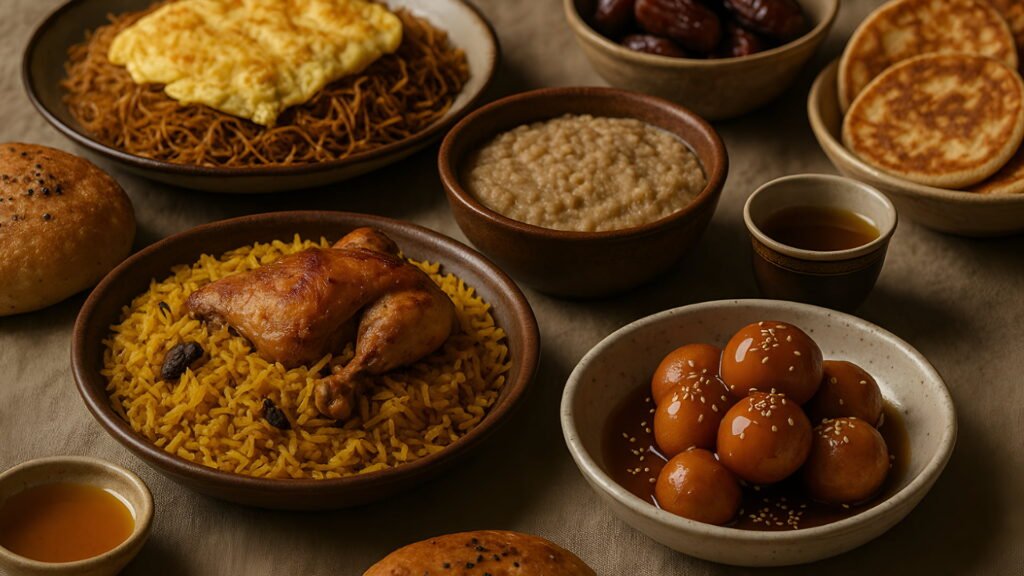
One of the most famous dishes is Al Harees, a simple yet rich preparation of wheat and meat slow-cooked for hours until smooth. It is often served during Ramadan and special occasions. Another favorite is Al Machboos, a rice dish flavored with saffron and dried limes, cooked with chicken, lamb, or fish. For something sweet, Luqaimat are small golden dumplings drizzled with date syrup and sesame seeds, a perfect dessert that locals adore. These dishes represent comfort, celebration, and a true taste of tradition.
Breakfast the Emirati Way
Emirati breakfasts are filling and delicious. A popular choice is Balaleet, a dish of sweetened vermicelli with saffron and cardamom topped with a thin omelet. Another is Khameer bread, soft flatbreads often enjoyed with cheese, honey, or date syrup. Families also enjoy Chebab pancakes, which are flavored with saffron and served with date syrup or cream cheese. These breakfast foods highlight how simple ingredients can be transformed into satisfying meals with unique local touches.
Seafood from the Gulf
Given Sharjah’s location along the Arabian Gulf, seafood has always been a vital part of the diet. Dishes like Samak Mashwi (grilled fish) and Shrimp Majboos are still widely enjoyed. Fishermen traditionally brought in fresh catches of kingfish, grouper, or tuna, which were then prepared with spices and rice. Fish was often dried and stored for months, ensuring food during lean times. Today, seafood remains a beloved part of Emirati meals, combining old traditions with modern cooking methods.
The Role of Dates in Emirati Cuisine
Dates are considered one of the most important foods in the UAE, and in Sharjah, they are eaten daily. They are rich in nutrients, easy to store, and deeply tied to Islamic traditions, often used to break the fast during Ramadan. Beyond being a snack, dates are used in desserts, breads, and even savory dishes. Paired with Arabic coffee, they symbolize hospitality. Visiting Sharjah without tasting local dates would mean missing out on a central part of the culture.
Drinks That Accompany the Dishes
A traditional Emirati meal is often accompanied by Arabic coffee, known as Gahwa, which is lightly roasted and flavored with cardamom. It is usually served in small cups along with dates. Karak tea, a stronger black tea with milk, sugar, and spices, is another favorite among locals and visitors alike. These drinks reflect warmth and hospitality, completing the experience of any meal in Sharjah.
Festivals and Food Traditions
Sharjah is known for its cultural festivals, and food plays a central role in these gatherings. During Ramadan, families prepare special dishes like harees and thareed, while Eid celebrations include feasts with meat, rice, and sweets. The Sharjah Food Festival is an annual event where locals and tourists can explore traditional and modern dishes together. These occasions are a celebration of both community and culinary traditions, highlighting how food connects people.
Dining in Sharjah Today
Modern Sharjah offers a wide range of dining experiences, from street food vendors to fine dining restaurants. Traditional Emirati restaurants preserve the authentic flavors while new chefs experiment with combining old recipes with modern presentations. Popular spots serve machboos, harees, and luqaimat in settings that allow visitors to enjoy the hospitality and warmth of the culture. Exploring these places gives you not just a taste of the food but also a deeper connection to Sharjah’s heritage.
Conclusion
Traditional food in Sharjah is more than just a meal. It is history, family, and celebration wrapped into flavors that tell a story of the land and people. Exploring Emirati cuisine in Sharjah offers visitors a chance to connect with culture in the most delicious way possible. From rich rice dishes to sweet desserts, every bite brings heritage to life. At Guide UAE, we help you discover not just the flavors but the experiences behind them, ensuring your journey in Sharjah is both memorable and meaningful.
For more cultural insights and travel tips, explore with Guide UAE.
Frequently Asked Questions
Is Emirati cuisine spicy?
Emirati food is not overly spicy compared to Indian or other Asian cuisines. It uses warm spices like cardamom, saffron, and cinnamon for aroma and flavor. This creates a fragrant and rich taste rather than intense heat, making it enjoyable for most palates.
Where can tourists try authentic Emirati cuisine in Sharjah?
Visitors can enjoy authentic Emirati dishes at traditional restaurants, cultural centers, and local food festivals. Many heritage areas in Sharjah feature eateries that serve machboos, harees, and other classics. These spots aim to preserve and share genuine local flavors with guests.
Are vegetarian options available in Emirati food?
Yes, many Emirati dishes can be adapted for vegetarians. Meals like balaleet, chebab pancakes, and rice-based dishes without meat are widely enjoyed. Restaurants in Sharjah often provide vegetarian-friendly versions while keeping the authentic flavors and traditional cooking methods.
How is Emirati coffee different from regular coffee?
Emirati coffee, or gahwa, is lightly roasted and flavored with cardamom, giving it a unique aroma and taste. It is served in small cups with dates and without sugar. Unlike strong espresso or cappuccino, it is more delicate and fragrant.
What makes Sharjah’s cuisine unique compared to other Emirates?
While Emirati cuisine shares similarities across the UAE, Sharjah emphasizes preserving authentic traditions. The city’s strong focus on heritage means more opportunities to enjoy food in cultural contexts, from traditional homes to heritage festivals, giving visitors a truly authentic experience.